SIMPL Best Practices

I recently received an email asking if I could document some of the things I wished I had known when I started Crestron programming. I didn’t touch Crestron until the twilight years of the 2-series (2010), but it was thankfully a solid platform to learn SIMPL Windows on. I had several years of AMX under my belt, so at least SIMPL+ wasn’t strange to me.

I’d like to write a few posts that explore how I approach programming now that I have a little hindsight. I’ll also reveal areas where I still struggle to find the best methods.

Crestron has a SIMPL Windows Best Practices guide that is useful. The release notes also contain some good rules to follow. I’ll try not to repeat what’s already stated there.

Let’s dig in!

Continue reading “SIMPL Best Practices”

Writing “Correct” Programs

Lately, it feels like I’ve had a problem making sure my programs are “correct.” I’m hoping if I write about it, I’ll see a pattern that I can fix. It’s frustrating for everyone when bugs slip into commissioned systems, and it reflects badly on custom programming as a whole when these errors aren’t caught before the space is in use. After all, we don’t want to be the cause of the house burning down.

Continue reading “Writing “Correct” Programs”

ATEM Mini Pro

Blackmagic Design makes some cool production switchers that are reasonably priced and work great. They even distribute an SDK to control them from Windows or Mac programs. Controlling from Crestron is tougher, but not impossible. Some third-party products have sprung up to make it easier, too. In this post, I’m going to walk through how I wrote a module to perform a couple of functions on the ATEM Mini Pro.

Continue reading “ATEM Mini Pro”

HTML5 Cleanup

The last post took me way too long to write (like an entire month), and I think it’s the format of trying to step through every single change, every single time that’s slowing me down. We’re going to be moving into program sizes where that just isn’t going to work. But before we make that jump, I want to do some clean-up on our last program, the Huddle Room.

Continue reading “HTML5 Cleanup”

SIMPL Tricks: 4-series

If you’re starting to get into 4-series projects but you don’t have actual hardware to test with you can load SIMPL programs targeted for 4-series processors to a 3-series. I’d heard the reverse was true: a 3-series programs should run unmodified on a 4-series. But it looks like for testing purposes, you can also run 4-series SIMPL programs on a 3-series.

Of course, your program would need to be written such that it runs on a 3-series and a 4-series. This is different from the 2-series to 3-series transition where the architectures must have been wildly different.

HTML5 + 4-series

We’ve already run into a couple things we need to be mindful of when using HTML5 and 4-series processors (see HTML5 XPanel for details about licensing and authentication). In this post, my goal is to break away from 3-series sandboxes and SIMPL Windows, so that means we’re moving into the realm of C# and Visual Studio 2019.

Continue reading “HTML5 + 4-series”

HTML5 + JS

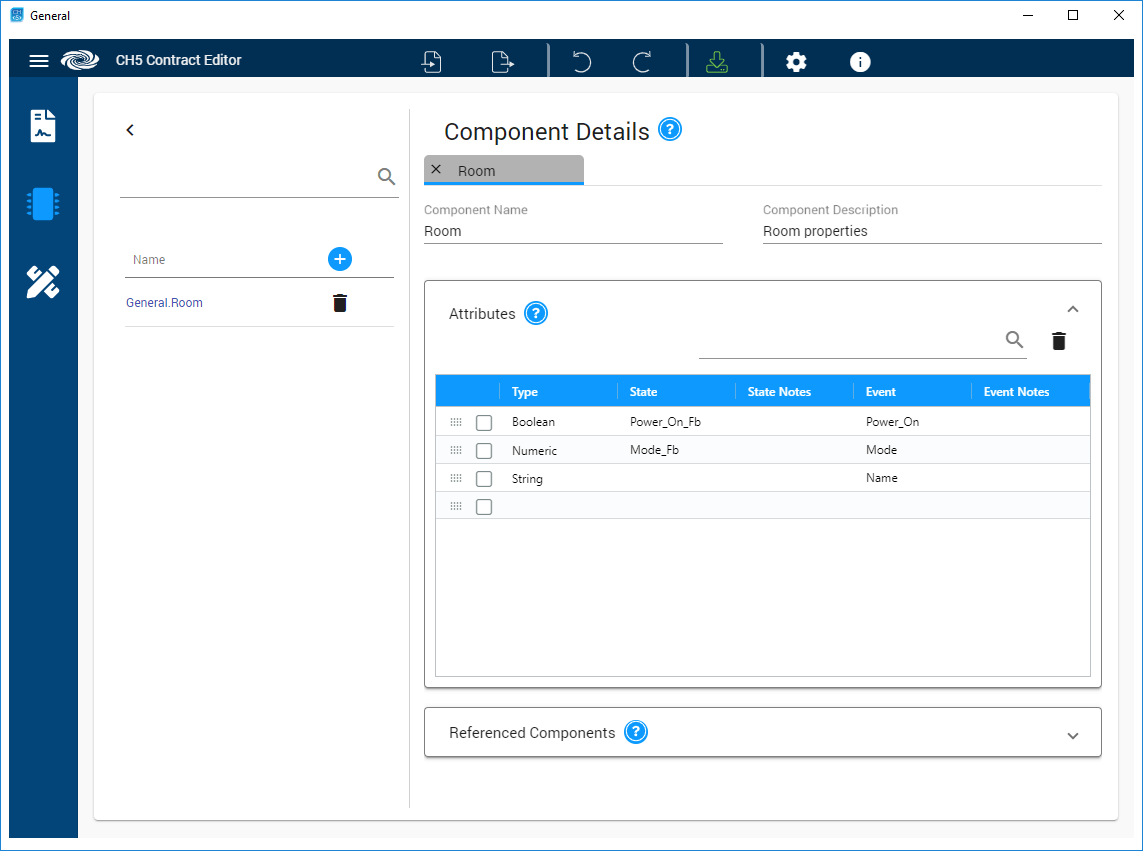
In this post, we’re going to greatly simplify how we create touchpanel layouts: we’re going to ditch the Contract Editor and most of the CH5 components. I do think these tools have value in the right hands, but I want to explore going my own direction. We might reinvent some of their features, but I think it will pay off from the learning aspect. And we’ll know how our program works, inside and out.

Continue reading “HTML5 + JS”